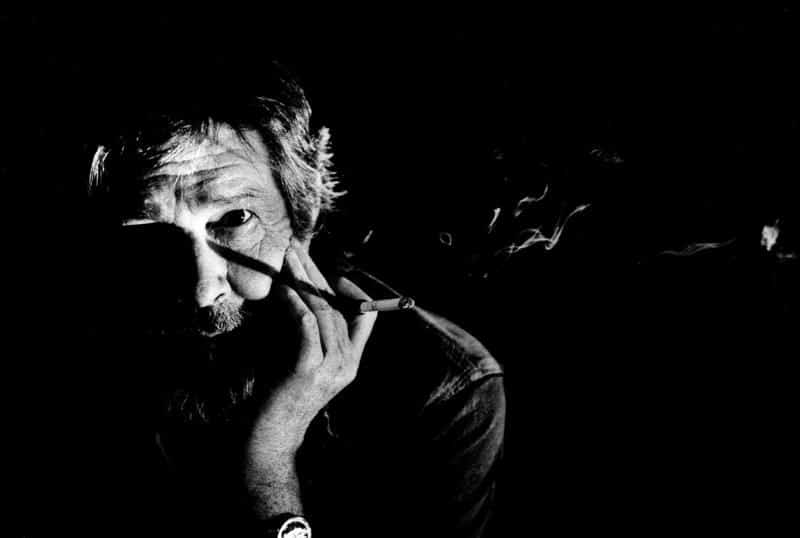
John Cage (Los Angeles, CA, 1912 – New York, NY, 1992) was an important American composer whose thought deeply influenced the music of his time. His composition teachers included Richard Buhlig, Arnold Schoenberg, Adolph Weiss and Henry Cowell.
His first compositions employed Schoenberg’s twelve-tone technique, but soon he would incorporate different ideas and influences in his writing, making use of recorders, turntables, radios, and other daily-use objects.
Later on, the influence of Buddhism would lead Cage to tackle different ways of contemplating music. In this context, Cage started to acknowledge extraneous sounds as an integral part of music, which would lead to his well-known indeterminacy period. By resorting to chance procedures and operations, like the Chinese I Ching, he sought to distance himself from the performers’ and his own personal choices.
Among his most renowned works are Living Room Music (1940), Sonatas and Interludes for Prepared Piano (1946–48), In a Landscape (1948) and 4′33″ (1952).
John Cage also wrote about music, and some of his interviews were subsequently published, among which Silence: Lectures and Writings (1961), For the Birds (1981) and Conversing with John Cage (1988) stand out.